Feeling anxious for no reason? 5+1 tips from a psychologist


Written by
The meaning, symptoms, and possible consequences of anxiety without a cause. What might be behind it, and how can it be managed? Expert advice.
Olvasnál még tőlünk?
Add hozzá a Tabuk Villáját a Google preferált forrásaidhoz, hogy könnyebben megtaláld új cikkeinket.
Do you feel tense, but can't say why? It's like you're always on alert, even though there is no real danger.
If this feeling sounds familiar, you may be dealing with what is called anxiety without a clear cause – which is actually very real, just not always triggered by something obvious.
In this article, we help you understand what may be behind “cause-free” anxiety, when to ask for help, and what you can do if you're struggling with it right now.
The background is not always conscious, yet real causes stand behind anxiety.
If cause-free anxiety lasts for a long time, it can have serious consequences, but it can be treated.
With therapy, the inner patterns that lead to anxiety can be recognized and changed.
Can anxiety really happen without a cause?
Many people experience anxiety as if it came out of nowhere – as if there were no specific trigger or event to explain it.
But that does not mean there is no reason for it. It only means that the reason is not always conscious, or it may be hidden deeper than we first realize.
In psychology, anxiety is often the result of inner, unresolved tension or past experiences that seem to get activated in the present “without a cause”.
That is why it is important not to question your own feelings – they are valid even if you cannot say exactly what triggered them.
Anxiety symptoms in short – what does it feel like?
Anxiety has many faces – and it is not always easy to notice. For some people it shows up in the body, for others thoughts race, and for others behavior changes.
Physical symptoms
Fast heartbeat
Shortness of breath
Chest pressure/chest tightness
Heart twinges
Sweating, trembling
Abdominal discomfort, dizziness
Back pain
Muscle tension, restless sleep
Mental symptoms
Constant worry, rumination
“What if...?” thoughts
Inability to relax or switch off
Irritability, impatience
Difficulty concentrating
These symptoms often build on each other, and over time they can become constant – especially if we do not get confirmation that what we feel is real and treatable.
What may be behind cause-free anxiety?
Apparently cause-free anxiety can have many different triggers. Behind the scenes, there are often processes we do not always notice – or even think of as possible causes:
Generalized anxiety disorder (GAD): persistent, diffuse anxiety that is not tied to one specific situation.
Genetic tendency: increased anxiety sensitivity can also run in the family.
Childhood experiences, trauma: the impact of long-past experiences on your current nervous system state.
Life changes: moving, divorce, work stress – even if we do not see them as “dramatic”.
Diet and stimulants: caffeine, alcohol, and blood sugar swings can also increase anxiety.
Health issues: overactive thyroid, hormonal changes, lack of sleep.
Because the causes can be so varied, you often need an outside perspective, for example help from a psychologist, to understand it clearly.
The effects of strong ongoing anxiety
Long-lasting anxiety is not just uncomfortable – over time it wears down the body, and it affects quality of life. Focus narrows, relationships become strained, and performance drops too.
If anxiety lasts a long time and is left untreated, it often leads to other mental health problems as well:
Panic attacks: a sudden, intense feeling of physical and emotional fear, often experienced as “going crazy” or “fear of dying”.
Depression: a common next step after anxiety. Ongoing inner tension, lack of coping, and a sense of helplessness can lead to low mood and hopelessness over time.
Obsessive thoughts or behaviors: some people start trying to “control” things to reduce anxiety, for example repeated thoughts or rituals develop – but these also increase inner pressure.
Cause-free anxiety is a sneaky thing, because many people get used to it: they learn to live with it, function at half power, or accept that “this is just how I am”. But this reduces your connection to life, your sense of joy, and being present – and over time the risk grows that anxiety will take a more serious form.
So the most important thing is: you do not have to settle for it.
Anxiety is not you – it is a state that can be understood, treated, and in many cases even fully resolved.
But the first step is to take your own feelings seriously – even if the world says: “come on, you're just too sensitive”.
When should you ask for help?
Many people wait too long. They think, “it will pass”, “I'm just too tired”, “it's a hard time right now”. These are all understandable thoughts – but if anxiety lasts for several weeks, if it gets in the way of daily life, or if it shows up at night too, it is worth reaching out to a psychologist.
Some warning signs that it is time to ask for help:
You cannot calm down even when everything around you is fine.
You have physical symptoms, but medical tests do not show any problem.
Because of anxiety, you cannot enjoy things that used to bring you joy.
You feel like you are “not yourself”.
Treating cause-free anxiety with therapy
Therapy is one of the most effective tools for treating cause-free anxiety – especially when the anxiety is recurring, persistent, or seemingly unexplained.
A psychologist can help make sense of the feelings that so far have only been part of your everyday life as heavy background noise.
The goal is not only to ease the symptoms, but to uncover the underlying patterns and connected memories – that is, to understand what triggers the anxiety and how you can respond differently.
During the therapy process, you gradually learn to recognize the specific way your anxiety works: when it gets stronger, what situations activate it, and what thoughts, body sensations, and behaviors go with it.
This alone is a huge step, because once you start noticing the patterns consciously, you are no longer only suffering from anxiety – you can also affect it.
Practical tips for cause-free anxiety
A psychologist can teach you tools that help reduce the intensity of anxiety.
If I could give you 5+1 tips for what to learn, these would be the ones:
breathing exercises,
body awareness exercises,
relaxation methods (for example progressive muscle relaxation),
finding a present-moment focus,
building inner dialogues that quiet rumination and self-criticism.
+1: add daily routine, exercise, and enough sleep – in both length and quality!
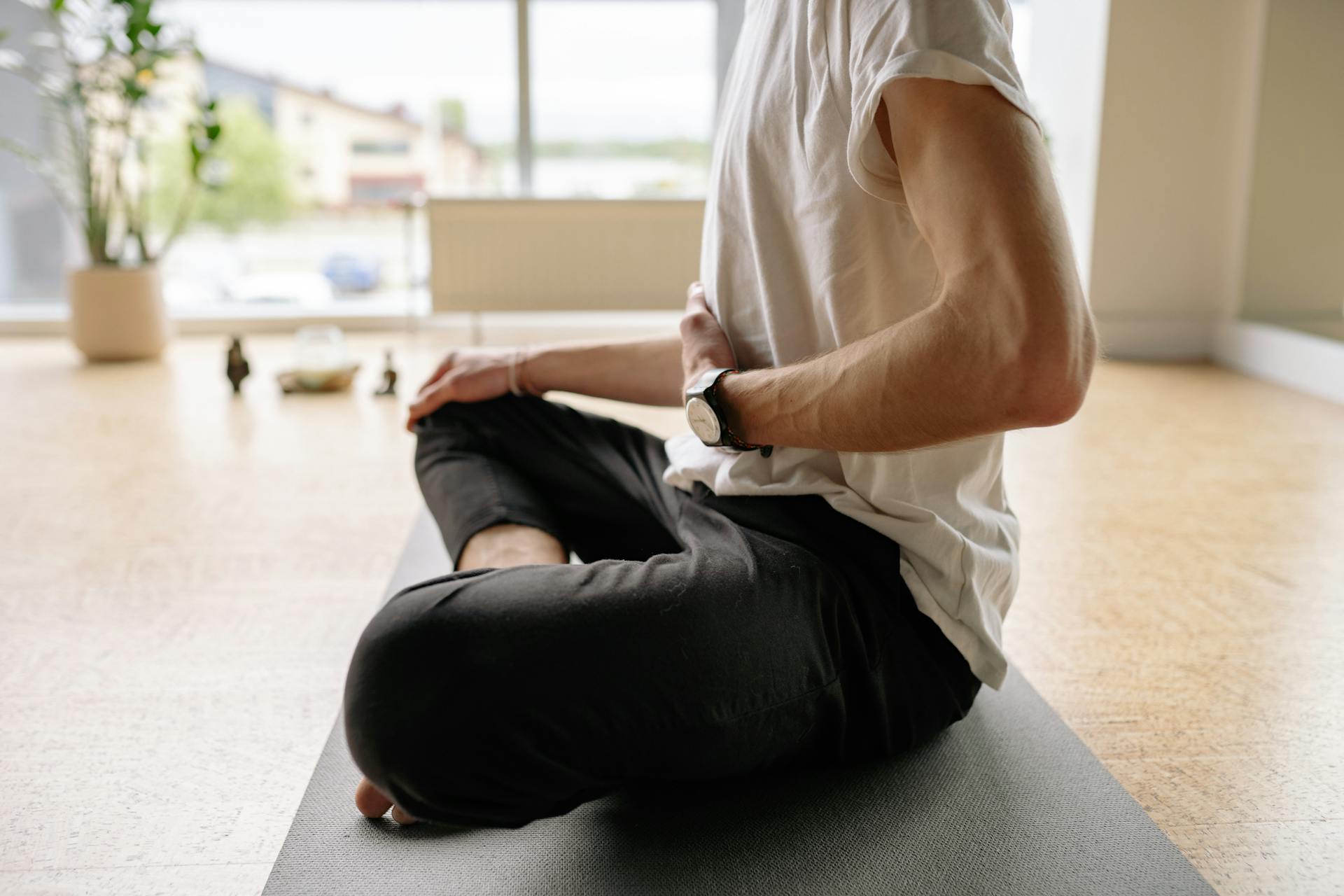
These techniques do not work like magic, but with regular use you can gradually regain control over your inner state.
Another important part of therapy is that you can process past experiences in a safe, accepting space that continue to work in hidden, unconscious ways in the present, and often “interfere” in your life through anxiety.
A memory, old pattern, or repressed feeling can gain new meaning here, and that gives you the chance to handle similar situations differently in the future.
So in therapy, the goal is not only to reduce the intensity of anxiety, but also to build a new kind of relationship with yourself, where you turn toward your own feelings with understanding and support, not fear.
And that change can bring real, lasting relief.
Medication for cause-free anxiety
In more severe cases, medication support may also be needed, especially if anxiety is already getting in the way of daily functioning. This is always decided by a psychiatrist, and if needed the psychologist will recommend a consultation.
The most common medications are:
SSRIs (selective serotonin reuptake inhibitors) – for example sertraline, escitalopram
Benzodiazepines – only for short-term use, under medical supervision
Herbal-based preparations – in milder cases
The best medication is not the same for everyone – individual sensitivity, the severity of the condition, and other health factors all play a role in choosing the right one. That is why it is important for medication treatment to be guided by a professional.
There is a way forward if you feel anxious for no reason
Anxiety – even if it seems “cause-free” – is not random, not an exaggeration, and not weakness. Your body and mind are sending signals.
And while it may feel like this is forever, experience shows that with the right help, it can be learned, managed, eased, and in many cases it can disappear completely.
You do not have to wait until it becomes unbearable. If it is hard already, know this: you are not alone, and life can feel different.
Frequently asked questions
Why do I feel the most tense in the morning after waking up?
Morning anxiety is often caused by the body's natural rise in cortisol (the stress hormone), which in sensitive people can show up as “cause-free” inner trembling or chest pressure.
Can anxiety cause memory problems?
Yes, constant worry uses up the brain's working memory, which can lead to concentration problems and a feeling of mental fog (brain fog).
Does anxiety have something to do with the fact that my parents were too strict with me as a child?
Perfectionist parenting or a lack of safety can fix early stress responses, which can continue in adulthood as constant alertness or a strong need to please.
How long does it usually take to improve if I start seeing a psychologist?
The pace of improvement is completely individual, but most people already feel less tension and the benefit of the first effective coping tools after 4-8 sessions.
Did you like the article? Then save it to your bookmarks so you can find it again quickly anytime, or share it on one of your social platforms.
Olvasnál még tőlünk?
Add hozzá a Tabuk Villáját a Google preferált forrásaidhoz, hogy könnyebben megtaláld új cikkeinket.
Share on Facebook
Share on X
Copy link
Similar articles